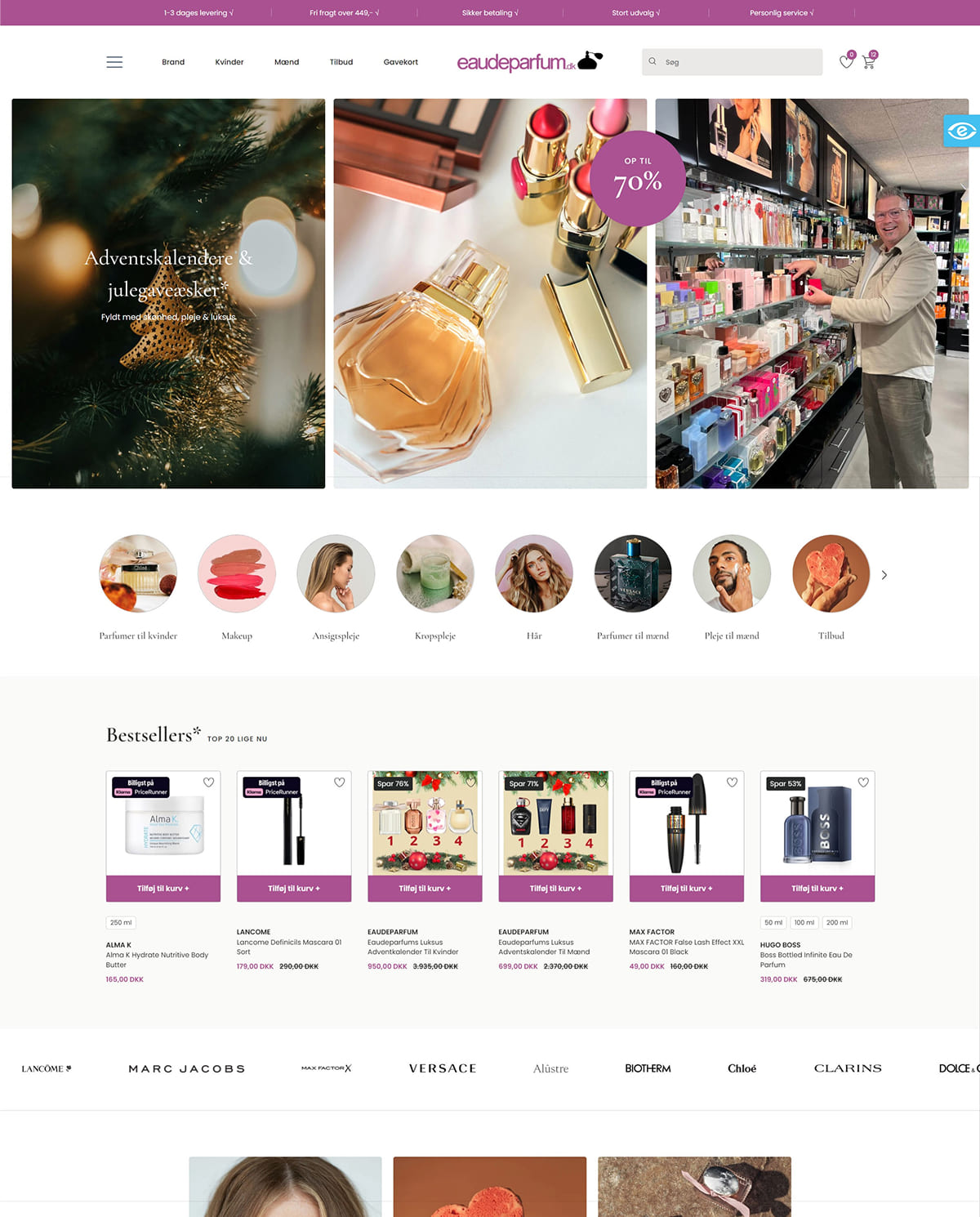
We began the DanDomain to Shopify migration by analyzing the existing DanDomain structure and API limitations. Since DanDomain restricts data retrieval to 100 items per call, we developed a custom API pagination and data caching system to ensure every record (including 6,157 products, 54,227 customers, and 53,380 orders) was securely fetched and stored in a local database.
Once all data was collected, we converted the product catalog into Shopify-compatible CSVs, including variants, SKUs, pricing, media, and metafields. Using Shopify’s GraphQL Admin API, we then recreated the entire category hierarchy, mapping each DanDomain category into a Shopify Collection while optimizing internal linking for SEO.
Next, we migrated all customer accounts and order histories, preserving payment, fulfillment, and transaction details. Each customer profile was imported with accurate contact data, and post-migration password resets were configured for secure reactivation.
Custom Theme Development
We designed and developed a custom Shopify theme based on Adobe InDesign files provided by the client. The goal was to match the original branding while modernizing the experience with:
- Interactive mega menu
- Smart product filters and predictive search
- Dynamic AJAX cart
- Fully responsive layouts optimized for mobile
- SEO-friendly markup with JSON-LD schema and meta tags
The new design combined aesthetics with functionality, resulting in smoother navigation, improved user engagement, and higher checkout completion rates.
POS & Multi-Location Integration
We implemented Shopify POS for two physical store locations, connecting real-time inventory management and sales reporting. This integration enabled barcode-based checkout, stock synchronization, and unified analytics between online and offline sales.
Technology Stack
- Languages & Frameworks: JavaScript, jQuery, LiquidJS, TailwindCSS, HTML5, CSS3
- APIs: DanDomain API, Shopify GraphQL Admin API, Shopify REST API
- Database: MySQL (Migration database reformatting)
- Performance Enhancements: Cloudflare CDN, lazy loading, Liquid caching, asset minification
- SEO Setup: Structured data, canonical URLs, and 301 redirects
Results of the DanDomain to Shopify Migration
The migration transformed the DanDomain webshop into a fast, scalable, and growth-focused Shopify store.
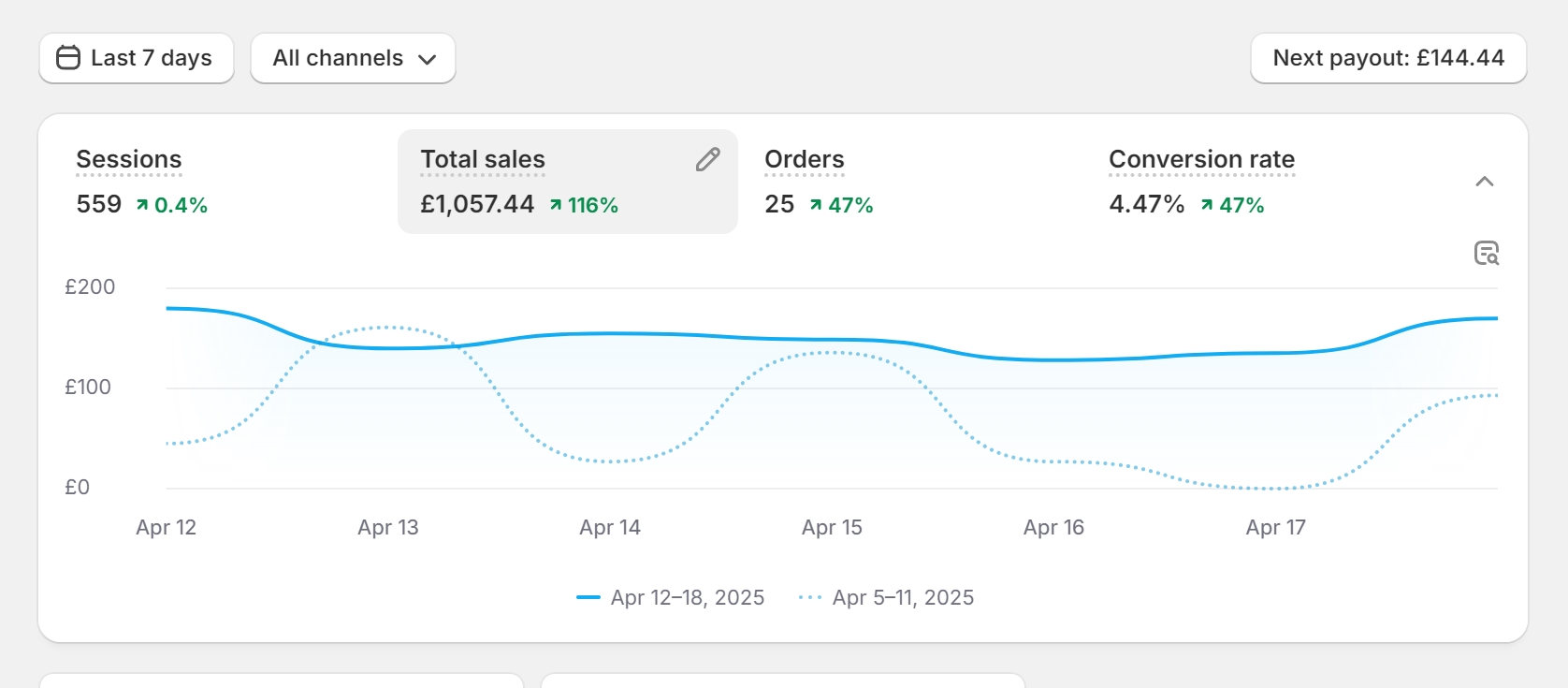
- Sales increased by 200% in one week
- Page speed doubled, improving mobile usability
- All SEO rankings retained, preserving organic performance
- Inventory and POS fully synchronized, reducing operational friction
Today, the live Shopify store runs smoother, loads faster, and converts visitors into customers more efficiently than ever. This is a complete evolution from DanDomain to a future-ready Shopify ecosystem. For conversion work on an existing Shopify store, see our Shopify conversion optimization for TryMommyandMe.
The full technical write-up, covering the API cap, the collection handles and the redirect map in detail, is our case study on the DanDomain to Shopify migration.